
American statesman, scientist and author Benjamin Franklin coined the famous phrase “In this world nothing can be said to be certain, except death and taxes.”
Now, students attending Lumpkin County schools in the upcoming 2025/2026 school year can add a new guarantee to that list: breakfast.
“Yes, we are trying ‘Provision 2’ as a mode of service here for student breakfasts in Lumpkin,” confirmed Lumpkin County Schools Nutrition Director Julie Knight-Brown when asked about the recent change.
“Gainesville City Schools does Provision 2 breakfast and lunch, and has for several years,” she added.
Knight-Brown explained that Provision 2 is “very different from CEP,” which stands for the Community Eligibility Provision.
Both are options that allow schools to offer free meals to all students, but under very different conditions.
CEP uses a formula based on identified students to determine free meal eligibility, while Provision 2 requires participating schools to conduct an initial meal count in year one, and then continue to operate under those percentages for a four year period.
“Since we have declared Provision 2 breakfast this school year, we will use this year's meal applications to establish our ‘base year’ free, reduced and full-pay eligibility figures for claiming breakfast meals accordingly,” Knight-Brown said.
EXPLORING OPTIONS
According to Knight-Brown, Provision 2 is the only one of the three alternative federal “Provision” options approved for use in the state of Georgia.
“In our state, we are not permitted to operate Provision 1 or 3. USDA [The U.S. Department of Agriculture] hands down the basic regulations to states, and then states interpret and direct the districts on how they allow them to implement their programs,” she explained.
Provision 2 allows schools to serve breakfast and/or lunch to children at no charge for up to four years in exchange for a slight reduction in administrative burdens.
“That reduction in administrative burden is not something our office will really see with Provision 2 breakfast implementation—we will not be reducing our central office staff hours,” Knight-Brown said. “Systems that can implement both Provision 2 breakfast and lunch like Gainesville City Schools do see that admin relief, because they only need to send out and process meal applications every four years.”
These three Provision options are not part of any recent legislation, but rather were approved by Congress years ago.
“We are confident in trying this option of breakfast service out this year, because we are currently still able to include students that receive Medicaid as eligible for free/reduced meals—plus the state is still reimbursing SNP's [School Nutrition Programs] for the cost of the reduced student meals,” Knight-Brown said.
She further explained that Medicaid, or Peachcare for kids, became a qualifying item for free/reduced meals just two years ago, starting in school year 2023-2024.
“Last year, ’24-’25, we held pretty steady in our free and reduced percentages. Assuming we do so again this school year, I am confident our program can afford to implement Provision 2 breakfast and maintain financial self-sufficiency,” Knight-Brown said.
BREAKFAST OF CHAMPIONS
Knight-Brown confirmed that at this time she is only opting in to Provision 2 for one meal a day.
“We’re just doing it for breakfast, because I feel confident we can financially sustain this approach at breakfast, but probably not if we did lunch as well,” she acknowledged.
Lumpkin County’s School Nutrition Program will fund the difference in the total cost of each breakfast meal, which was $2.78 at the end of school in May, including labor, minus the full-pay student's federal reimbursement rate, which is 40 cents this school year.
“Lunch will be conducted in the traditional fashion like last year, based on eligibility. The meal price for students will be free, reduced price (40 cents, but the state is picking up that tab), or full-pay, which is $3.25 for students this school year,” she added.
Knight-Brown said administrative costs will not drop sharply, because meal applications will still need to be collected from parents.
“We will continue to ask families to complete a new meal application every school year for our lunch program eligibility figures, which will change from year to year and impact LCSS district federal funding: title money, technology and other education support dollars,” she indicated.
The main advantage, she said, is for student families to have that free meal option available to them each day.
“Also, we hope that the idea of free breakfast for all students will encourage more total students to grab a breakfast every morning on their way to class. We anticipate an overall growth in all breakfast participation, which would provide added dollars in reimbursement for free and reduced meals as well. We may also see a spill-over of more students eating lunch. too, since the day's school meals will total $3.25 instead of last year's $5 per day,” she noted.
AN IMPORTANT MEAL
Breakfast service in Lumpkin County schools starts early, around 7:15 to 7:20 a.m.
That corresponds to the times students are being dropped off, either by bus or in the car rider lines.
“The bell rings for them to be in class around 7:45 at each school, so there is not a whole lot of time to grab breakfast, but Principals have laid out procedures in each school to facilitate them going to the cafe or breakfast cart to get a meal,” Knight-Brown said.
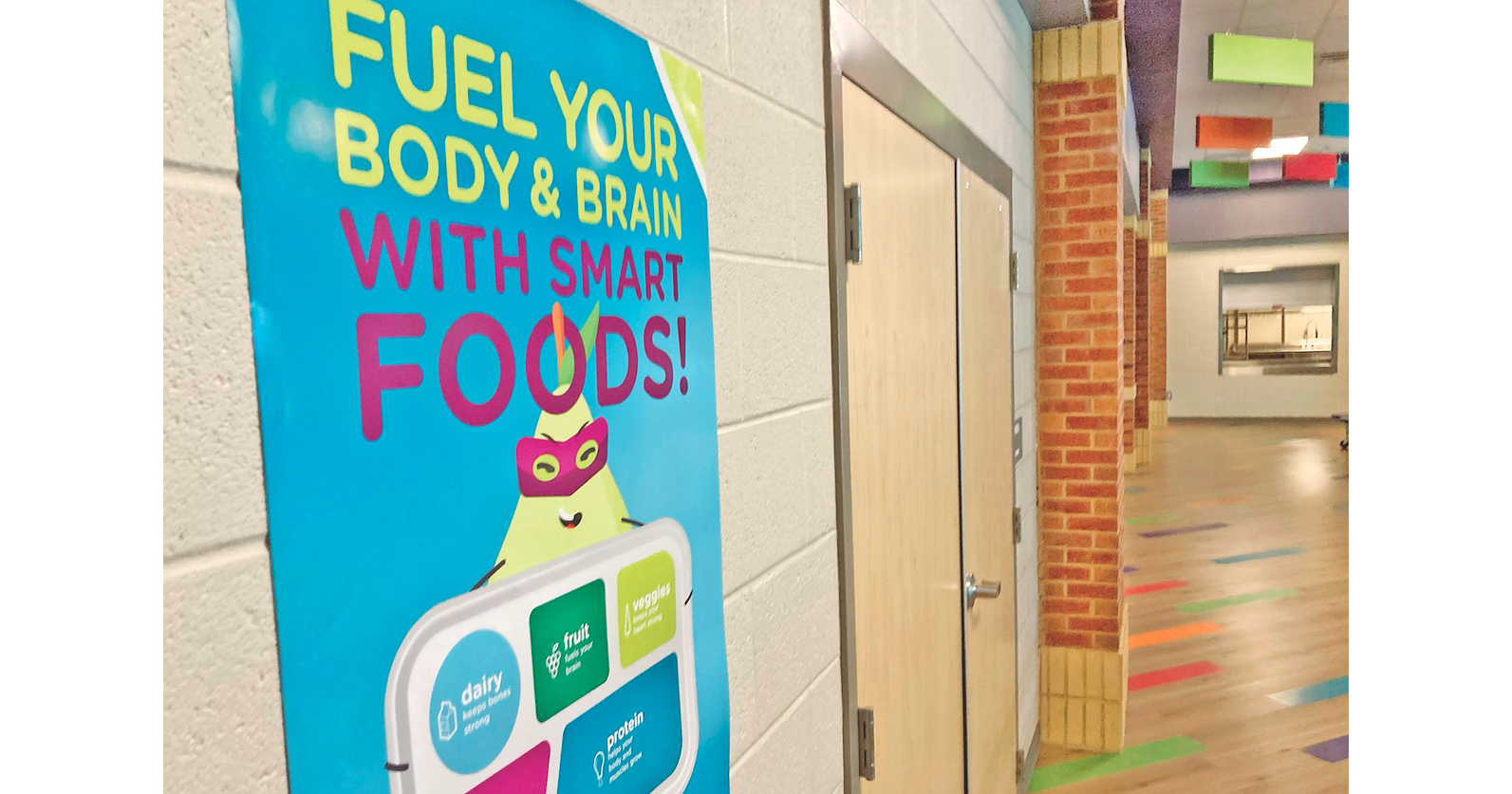
Lumpkin schools offer “grab and go” breakfast meals with entree choices like a chicken biscui (plus a juice) in a bag or paper boat. Students can also grab a fruit and milk.
They have the option to eat in the cafe dining area if they are at school early enough.
In addition, most schools allow the kids to take breakfast to their classrooms and eat there.
“A number of teachers have shared that they like breakfast in the classroom, because it's a casual moment to get to know their students better, which ultimately supports learning,” she said.
Last year, Knight-Brown indicated that total district breakfast participation was 30.2 percent. She said that clearly leaves lots of room for growth going forward.
“The lowest participation was in LCHS (9 percent) and LCMS (13.7 percent), and the highest was at LBES (at 59.1 percent),” she noted.