
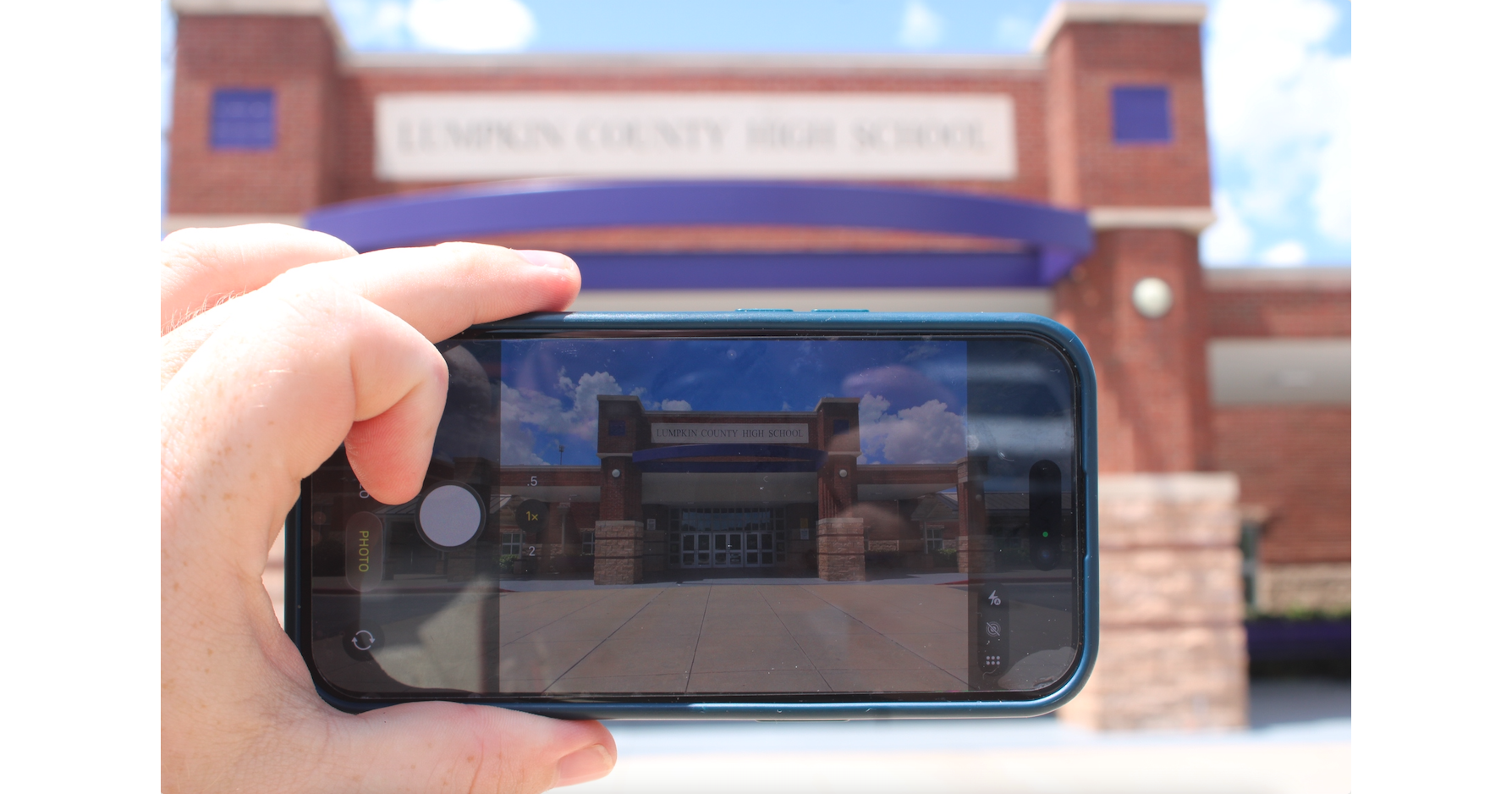
It’s a new year for Lumpkin County High School, but something’s missing. It’s not their pencils, pens or paper.
This year students are entering the school under a new mandate banning the use of cellphones. Georgia Governor Brian Kemp recently signed a statewide law for all public schools, giving districts until next school year to fully implement the mandate.
But Lumpkin County High School chose not to wait. Students returned a couple of weeks ago to find the new restrictions already in place, marking a significant shift in daily routines and classroom expectations.
The new rule is being met by students who are weighing the impact.
“I feel like the new cell phone ban has its pros and cons. I think it’s going to help me pay attention more and actually focus during class,” said junior Kolson Howell. “It also makes us have conversations with each other rather than staring at our phones. The only thing I don’t like is that we can’t have it out during lunch.”
While staff members say they’ve already noticed early benefits, many students remain frustrated or are hoping for a compromise that allows limited phone access during the school day.
Principal Brian Matthews told The Nugget the school’s decision to begin early was intentional.
“As a principle, my personal opinion isn't what drives this decision. My responsibility is to implement state law and prepare our students for success,” Matthews said. “Since Georgia’s statewide phone restrictions take effect next school year, we decided to begin implementing our expectations early so we could work through the challenges and make the transition as smooth as possible.”
A PRACTICAL APPROACH
Some Georgia schools have begun collecting phones each morning and storing them in locking pouches. Matthews said Lumpkin County opted for a simpler, more realistic system.
“We chose a different approach because we believe it’s the most practical for our students and staff,” he said. “In speaking with administrators at other schools, I was told that some students have multiple phones and will place an old or inactive phone in the pouch while keeping their actual phone with them. Whether that’s common or not, it reinforced our decision to focus on a system that is realistic to supervise.”
The school’s expectation is straightforward.
“Phones should not be visible during the school day,” Matthews said. “Students should keep them in their backpack or locker from the start of the school day until dismissal. There is no perfect solution, but we believe this approach is the most realistic and manageable while still meeting the intent of the law.”
DISCIPLINE AND EMERGENCY EXCEPTIONS
Matthews emphasized that consequences for violations are designed to teach, not punish.
“We believe in educating students first and using the least severe consequence necessary to correct the behavior,” he said. “If a student continues to violate the expectation after being reminded, the consequences become more significant with each repeated offense.”
Some students, including sophomore Riley Head, say their biggest concern is safety.
“The United States in general doesn’t always feel safe enough for students to be completely without their phones,” Head said. “Having access to my phone gives me a sense of security because I know I can quickly contact my parents or call for help if there’s ever an emergency.”
Matthews said medical requirements are accommodated, and true emergencies would be handled with flexibility.
“Students with documented medical needs that require access to a phone have procedures in place,” he said. “If we were ever faced with a true emergency such as a lockdown or severe weather event, we understand that students may need to communicate with their families.”
EARLY SIGNS OF IMPROVEMENT
After the first week, Matthews said educators are already noticing changes.
“Teachers are reporting better student engagement during instruction, and we’ve noticed students interacting more with one another in the hallways and at lunch instead of looking at their phones,” he said. “The increased face‑to‑face interaction has been encouraging.”
The Nugget also reached out to physical science teacher Myriah Richerson, who also has children that attend the local high school.
“I love the cell phone ban as a parent and a teacher,” she said. “We as teachers feel like the kids are more engaged and are actively learning. Another positive is that we have far less distractions in the classroom and we are not wasting valuable instructional time monitoring for cell phones. I’ve been really proud of our kids at the high school as they have been really respectful as a whole and are following the rules in place.”
STUDENT RESPONSE
Reactions among students have been mixed, with students hoping to find a middle ground.
“I think phones should stay put away during class unless a teacher gives permission,” Head said. “But students should be allowed to have them before school, during lunch, between classes and after school. That way, phones aren’t causing distractions during lessons, but students still have access if they need to contact their parents or if an emergency happens.”
Matthews said the school tried a similar approach last year but ran into issues with phone use. With the new statewide mandate, he said consistency is now required.
“The new Georgia law requires schools to prohibit personal electronic devices during the instructional day, so our responsibility is to implement the law as written,” he said.
Senior Turner Rogers disagrees with the ban entirely.
“I think it’s absolutely unnecessary,” Rogers said. “We can’t check to see what all is going on between class or at lunch. And it leads to an overall slower day. I say just ban them during instructional hours or let teachers decide per class.”
The State’s public school cell phone ban will officially go into effect on July 1, 2027.