
July is officially here, and the season is “ripe” for a delicious fundraiser that brings home the bacon each year: Community Helping Place’s Tomato Sandwich Supper.
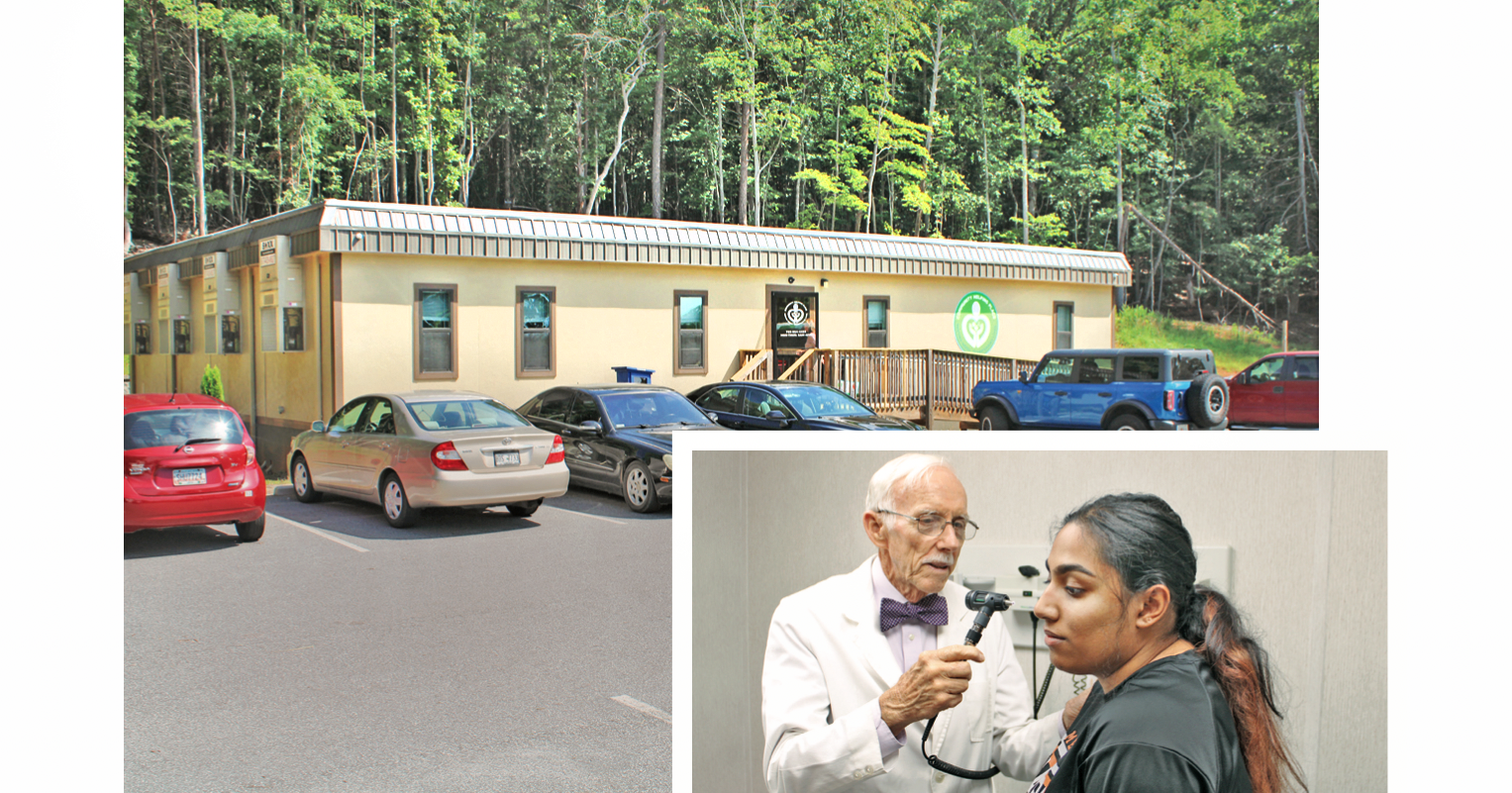
Believe it or not, this is the 19th iteration of the popular annual event, which fosters fellowship while raising critical operating funds for CHP’s Anne Green Free Clinic, located at 75 Rock House Road in Dahlonega.
The Tomato Sandwich Supper will take place on Thursday, July 16, from 5 p.m. to 6:30 p.m. and will be hosted at four different local churches: Dahlonega Baptist Church, Dahlonega Methodist Church, St. Luke Catholic Church and St. Peter Lutheran Church.
The savory summer meal will be available for either dine-in or take out and consists of a BLT sandwich, chips and a homemade dessert, all for $12 per person or $35 per family.
The meal will be followed by a free concert in Hancock Park from 6:30 to 8 p.m. featuring popular local country music artist Kurt Thomas.
CHP Director of Operations & Development Paula Payne said the free clinic receives no government funding. Other than individual donations and some private grants, the Tomato Supper event is the non-profit’s primary source for its yearly operating funds.
“Grants are very program-specific. They don’t like to pay your light bills,” Payne said.
Payne and the clinic’s long-time Medical Director, Dr. Gene Westmoreland, met with The Nugget recently to review the positive impact the free clinic has made over nearly two decades in Dahlonega and how the public can contribute to their worthwhile effort.
DOCTOR IN THE HOUSE
When The Nugget arrived at the Anne Green Free Clinic, Payne was ready to introduce Westmoreland, whom she described as “a well-respected and loved member of the community” and “super humble.”
As Westmoreland joined the room, Payne noted that the doctor was even pulling weeds out of the Anne Green Memorial Garden the day prior.
“It’s a full-service position,” joked the affable Westmoreland.
Payne explained that she and Westmoreland helped found the free health clinic together nearly two decades ago.
“It was amazing,” Westmoreland said. “Anne came up with the idea, and we needed somebody who had experience in something like this, and it just happened that Paula moved to Dahlonega and attended our church at the same time.”
Payne said she reached out to CHP, but they said ‘no’ to the ambitious idea at first. But Westmoreland’s wife Joyce was a member of the CHP board and was vocal in her support for the idea.
“Anne Green knew a guy at another clinic, and we just kind of started a concept of how we would do it. It was in the basement of the old CHP store at the funeral home. We had a room a little bit bigger than this, and we stuck a curtain down the middle. We had two exam rooms like that: That’s how we started,” she recalled of the clinic’s modest beginnings.
“Modest is a nice word for it,” Westmoreland added.
Payne said the clinic started with nothing, but was able to grow substantially under the leadership of Westmoreland.
“He knew everybody, and everybody knew him, so he basically recruited the other doctors,” Payne said.
COMMUNITY-FOCUSED
Westmoreland obtained his undergraduate degree from North Georgia College and State University (now the University of North Georgia) and attended Emory University in Atlanta for his medical degree.
He recalled that when he first came to town, Lumpkin County had only one physician at the time, Dr. Harold Long.
“That was before we had a hospital. I had just gotten out of the Air Force, and was planning to do a residency at Grady, and decided I wanted to take some time and just see what life was like … I had gone to college here, so I came back and talked to Dr. Long and he was ready for some help,” Westmoreland said.
He went to work for Long at his busy 24-hour practice before ultimately getting married and starting a family.
“Five rooms in the back of the office were licensed as a hospital: We delivered babies there. So it was a pretty busy time. Too busy to raise a family, to have a wife and two kids right off the bat. So I went to work at the ER in Gainesville,” Westmoreland continued.
After his children got older, Westmoreland opened up his own office off of Mountain Drive. He practiced there for over a decade before selling it to Northeast Georgia Physicians Group.
Westmoreland was the medical director for five nursing homes when he joined the Anne Green Free Clinic.
“It was really interesting, because this was in 2008 when we had the economic downturn. A lot of people lost their jobs, and it really hit our area hard. And there were a bunch of patients that needed to be seen,” he said.
While he still had quite a few patients in assisted living, Westmoreland said he missed “having contact with the community and the patients that I knew,” and that was one of the reasons he agreed to help out CHP.
Westmoreland said that in the early days of the free clinic he saw former patients who had lost their health insurance and couldn’t afford a private physician.
“They had to come there, so we were really busy from the beginning,” he said.
Westmoreland officially retired from his work as a nursing home medical director just two years ago.
“I became older than any of the residents. I aged out of the nursing home,” he joked.
Westmoreland still serves on the Lumpkin County Hospital Authority, where he has been a member for roughly 40 consecutive years.
PUBLIC PRACTICE
The Nugget asked Westmoreland what some of the biggest differences are between volunteering at a free medical clinic, versus working at a private practice.
“There’s one really nice advantage in working here, because you don’t have to concern yourself with how much money the patients have to pay. We don’t have to worry about that,” he said, calling it “less of a headache.”
Westmoreland also cited the benefits of working under fewer regulations and having the ability to incorporate faith-based practices “to encourage the whole patient.”
“We don’t have to just concentrate on the problems that they come in for. If they need help with finances, we’ve got that. We have counseling available. It’s just more of a holistic approach, I think,” he said.
Payne added that the freedom of the physician to work on his or her own timetable is also valuable.
“We let each one of the volunteer doctors determine their style, their needs, what makes them happy, and I think that’s the biggest difference between a [free] clinic and a paid practice, is the doctors get to practice medicine the way they used to: connecting with the patient, building trust and establishing a relationship so that whatever advice is offered is going to maybe go a little bit further,” she said. “They can stay with the patients for 45 minutes if they want to and actually get a conversation going.”
COMMUNITY PARTNERS
Westmoreland said the most common medical problems he sees among patients of the free clinic are chronic diseases such as lung disease, diabetes and high blood pressure.
“And the thing the clinic does is it gives these people a medical home, so they can continue to be followed for the problem, rather than having to go to the ER when they have a problem,” he pointed out.
Payne said another advantage of free clinics is that they have dedicated staff who are skilled in finding free or reduced treatment options to help their patients, usually referred to as Patient Assistant Programs (PAPs).
One such partnership between CHP and Northeast Georgia Hospital allows CHP patients to go there for specialist services like MRI or CT imaging within 24 hours, at no cost to the patient.
“They’ve done that essentially since they built the new hospital here, so they’ve been a real good partner,” Westmoreland.
The pair also praised Northside Hospital for providing other subsidized treatments, the University of North Georgia for contributing nurse practitioner students as temporary volunteers and Woody’s Pharmacy for offering heavily discounted prescriptions to clinic patients.
Meanwhile, members of the community continue to donate gently-used crutches, wheelchairs and other rehabilitative equipment, keeping the clinic’s supply room fully-stocked.
Unfortunately, Payne said the clinic is facing a shortage in another critical area at this point: volunteer medical providers. The clinic currently has only two doctors, one OB/GYN, one physician’s assistant and two nurse practitioners currently on staff, with no resident pharmacist available.
“Volunteers can only last so long. There’s a big turnover,” admitted Westmoreland. He noted that some physicians’ contracts with hospitals forbid their participation due to potential malpractice claims.
Payne said she would like to let the community know that any volunteer doctors, pharmacists, dentists or nurse practitioners who can assist would be greatly appreciated.
She said a provider’s commitment could be as little as one day a month with no on-call responsibilities, since Westmoreland oversees patient labs and charts.
If you lack medical training, don’t worry: there are still plenty of other ways you can contribute. Individual and family advance tickets, as well as sponsorship tiers, are available online for this year’s Tomato Sandwich Supper right now.
Visit www.communityhelpingplace.org/events-fundraisers/ and click on the “Tomato Sandwich Supper” banner to purchase tickets or sponsorship’s to this year’s fundraising event.