
NOTE: This online version contains three additional questions and answers that were not included in the May 13 print edition due to space constraints.
Local elections are entering the home stretch, with the third and final week of Early Voting taking place now in Georgia ahead of the General Primary and Special Election on Tuesday, May 19.
Early Voting will continue through Friday at 56 Short Street in Dahlonega. Polling hours are 8 a.m to 5 p.m. this week. The final opportunity to cast a ballot will be on Election Day itself, from 7 a.m.-7 p.m.
The latest Voter Participation Report from the Lumpkin County Elections & Registration home page shows that, as of press time on Tuesday, a total of 3,016 Lumpkin residents have cast ballots thus far.
This final edition of candidate Q&A’s includes the two contested races for the local Board of Education: District 2 and District 4.
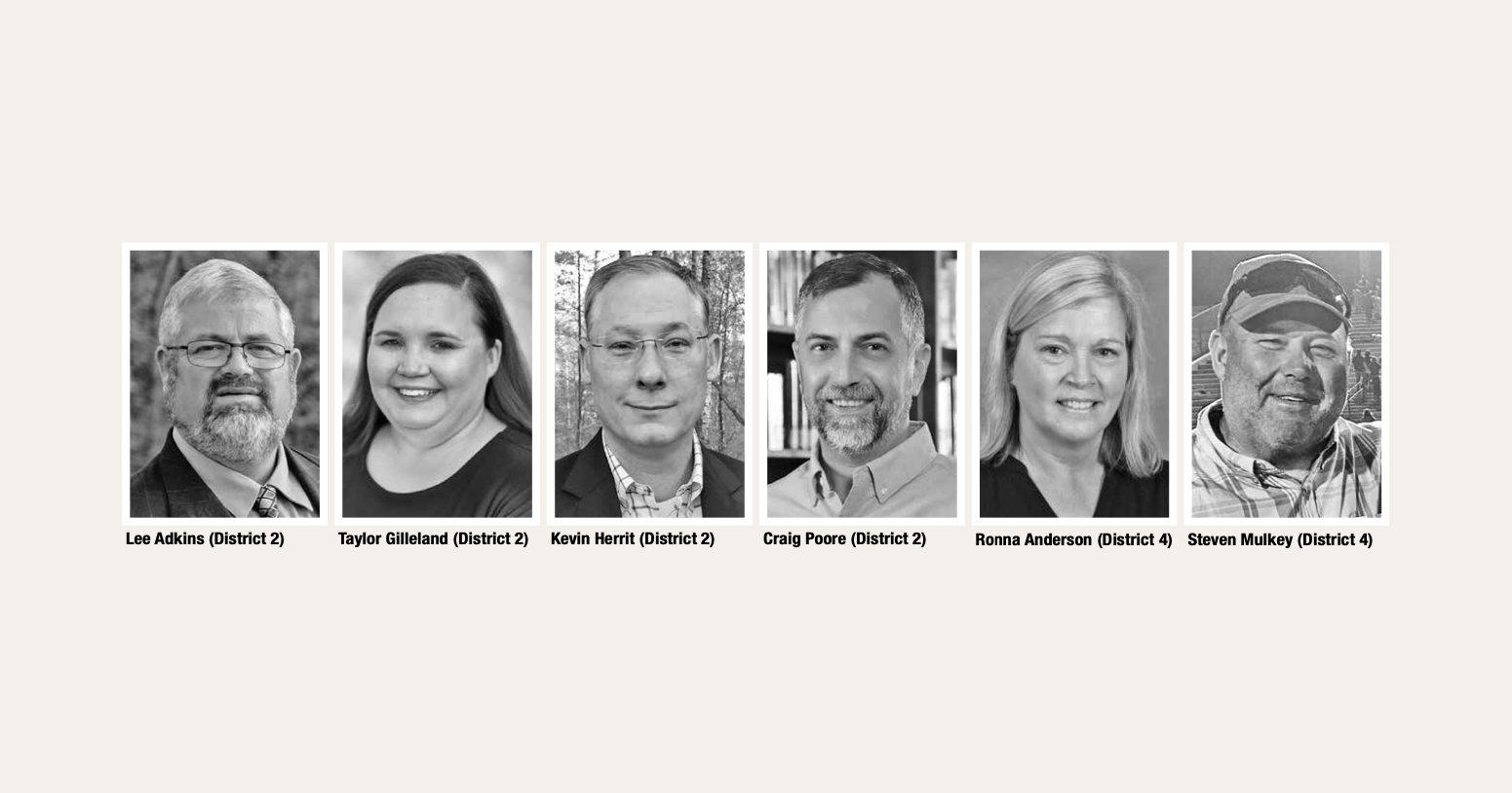
Candidates Lee Adkins, Taylor Gilleland and Kevin Herrit are challenging incumbent school board member Craig Poore for the District 2 seat, while Ronna Anderson and Steven Mulkey are competing for the open District 4 seat previously held by Vice Chair Lynn Sylvester.
For this survey, each candidate was e-mailed the same six questions. They were given equal time to respond in answers of 150 words or less.
Due to space constraints, three of the candidates’ unabridged responses are included below. However, all six answers can be viewed online for free at www.thedahloneganugget.com.
Q: Tell us a little about yourself. What are your qualifications to serve on the Lumpkin County Board of Education?
DISTRICT 2
Adkins:
My name is Lee Adkins. I’m originally from the small town of Arabi in South Georgia, and for the past 15 years, I’ve been proud to call Dahlonega home. Growing up in a small town taught me something that has stayed with me my entire life: the power of community. It taught me that when people come together, listen to one another and work toward a common goal, there’s nothing we can’t accomplish.
Gilleland:
I am the Chair of the School of Education at Truett McConnell University and have spent my career working in education and partnering closely with local schools. I hold degrees in education, including an Ed.S. in Teacher Leadership, and I have experience teaching both general education and special education in public schools. Through my work in higher education, I regularly collaborate with administrators, teachers, parents and students across our region. As a mother, educator and community member, I care deeply about maintaining strong schools that support students, teachers and families while preparing students for successful futures.
Herrit:
My wife, Amanda, and I are blessed with two exceptional children, Alexander and Abigail. We are all proud products of the esteemed State of Georgia Public School Systems. Currently, Alexander and Abigail are enrolled in the Lumpkin County School System. I hold a Bachelor of Science degree in Community and Regional Planning from Appalachian State University, a Master of Business Administration and a certificate in Entrepreneurship and Innovation from the University of North Georgia. Furthermore, I have obtained national accreditation in planning (AICP) through the American Planning Association and certification in Economic Development Finance Professional (EDFP) from Grow America. Currently, I serve as an assistant scoutmaster in Dahlonega’s Boy Scouts of America Troop 303. We have resided in Lumpkin County for the past eight years. I serve on the Georgia Mountains Regional Commission as a board member and am the Chair of the Lumpkin, Dawson, White County Joint Development Authority.
Poore:
I have lived in Lumpkin County my entire life, and this community means everything to me. My wife, Hollie, and I have been married for 32 years, and are proud parents of two children. Professionally, I hold a B.A. in Education Science, an M.A. in Education Biology and an Ed.S. in Educational Leadership. I have worked in education for 14 years and currently serve in administration for a program supporting students with therapeutic and special needs. Throughout my career, I have been a strong advocate for non-traditional education pathways, student mental health and students with special needs. What sets me apart is that I was also a local business owner before entering education. That experience gives me a practical perspective and an understanding of the challenges families and community members face outside the school system. I care deeply about our students, teachers, schools and the future of Lumpkin County.
DISTRICT 4
Anderson:
My name is Ronna Anderson. I’m married to Clark Anderson and have twin daughters, Sara Beth and Cara Anne. I’m a lifelong resident of Lumpkin County. I graduated from Lumpkin County High School and attended North Georgia College where I earned my Bachelor and Master’s degrees in early childhood education. While teaching, I continued my education and earned my six-year leadership degree from Lincoln Memorial University. I taught at Lumpkin County Elementary School for 32 years. I taught 25 years in the classroom and spent my last 7 years in a leadership position as School Improvement Specialist. After retiring, I filled a part-time Literacy Coach position at Lumpkin County Middle School. The next year I fully retired and began helping out with my new grandson, Dylan. So, when this opportunity came about, I knew it was my chance to give back to a school and community that I love.
Mulkey:
I am a native of Lumpkin County, with roots here going back at least four generations. I have lived here my entire life. My wife, Jennifer, and I are both graduates of Lumpkin County High School, and our three children are also graduates of Lumpkin County High School. I am a born-again Christian, a member of Siloam Baptist Church, and an ordained Baptist preacher. I have owned and operated Mulkey’s Landscaping in this community for more than 20 years. Through my lifelong connection to Lumpkin County, my experience as a business owner, and my dedication to faith, family and community service, I believe I am well qualified to serve as a member of the Board of Education.
Q: In the same way smart phones have been banned from the classroom, there seems to be the beginnings of a movement to shift away from screen-based laptop learning and back to classic text books. Where do you stand on this issue?
DISTRICT 2
Adkins:
I agree that moving some learning back to traditional textbooks could strengthen reading and critical-thinking skills. When students use textbooks, they often have to read full passages, interpret information and connect ideas on their own. That process builds comprehension, focus and patience. With laptops and AI tools, answers can appear instantly, which sometimes reduces deep reading and independent thinking. However, technology still has important benefits, such as access to updated information, interactive learning tools and flexibility. The best approach is probably a balance between both methods. Schools can use textbooks to develop strong reading and analytical skills while also teaching students how to use technology responsibly. Learning should not depend entirely on quick answers from a screen.
Gilleland:
Technology can absolutely be valuable in education, but I believe there is entirely too much reliance on it today. Students still need strong foundational skills like reading physical books, writing by hand and having meaningful classroom discussions without a screen in front of them. Personally, I do not believe elementary students need individual devices until around 4th or 5th grade. In middle and high school, technology should still be used intentionally and in moderation, not as the primary method of instruction. Teachers are the most important part of the classroom, not the device.
Herrit:
I think it’s important to use both methods to help our learners. One thing I’ve noticed in public schools is that we often expect students to jump right into screen-based learning without teaching them how to type. We’ve also missed out on teaching them cursive writing, which is essential for signing important documents. This has actually held them back and prevented them from fully developing into adults. As a dyslexic individual with the additional learning disability of dysgraphia, I am fortunate to have benefited from the provisions of the Americans with Disabilities Act (ADA). I believe that using a hybrid approach to learning is the most beneficial for our educators and students.
Poore:
As someone who has taught in the classroom, I’ve seen firsthand how smartphones have become a major distraction and, in many cases, have taken away from student learning. Over my years in education, I’ve seen a noticeable decline in attention, engagement and academic performance as distractions have increased. Technology absolutely has a place in education—but it should be a tool, not the driver of the classroom. Students need to learn how to use technology effectively, not become dependent on it to think for them. I do believe there is value in reducing excessive screen time and returning to more balanced instruction that includes textbooks, discussion, hands-on learning and direct teacher interaction. Real conversation, critical thinking and interpersonal skills are just as important as digital literacy. Our goal should be to prepare students for the modern world while making sure technology enhances learning rather than replacing meaningful teaching and human connection.
DISTRICT 4
Anderson:
I believe technology is important and has made a lasting impact on education. However, a computer cannot take the place of a good teacher. Technology is a tool, but education comes from the heart. I think that laptop learning will always have a place in a modern school system, but textbook learning provides an invaluable experience that increases reading comprehension and knowledge retention.
Mulkey:
I believe screen time should never take the place of hands-on learning. Children learn best through real-life experiences, creativity, interaction and discovery. If we rely too heavily on screens, our kids may never fully experience the wonders, opportunities and practical skills that exist beyond a device. Technology can be a useful tool in education, but it should support learning—not replace personal interaction, critical thinking and hands-on experiences that help children grow and succeed in the real world.
Q: Last year, the Lumpkin County school system, along with 70 percent of school districts in Georgia, voted to opt out of the statewide floating homestead exemption, which caps increases in taxable property values. A new state bill requires those systems to complete the same hearings and procedures next year if they wish to remain opted out. Would you vote to opt out again?
DISTRICT 2
Adkins:
I believe schools should continue being responsible with taxpayer money and focus spending on what directly benefits students. It also depends on whether the school system can make cuts in other areas before asking taxpayers to carry more of the burden. I also understand that seniors and others on fixed incomes can be hurt by rising property taxes when districts opt out of the exemption. There must be a balance between properly funding our schools and making sure people can still afford to stay in their homes.
Gilleland:
I believe this issue deserves careful thought because it directly impacts both our taxpayers and our schools. As someone raising a family in this community, I understand the concerns people have about rising property taxes. At the same time, I also understand the importance of making sure our schools remain strong and financially stable. Before making a decision, I would want to carefully review the numbers, listen to community input and consider the long-term impact on students, teachers and families. I believe people deserve honesty, transparency and responsible stewardship of taxpayer dollars.
Herrit:
I believe in supporting what the residents of Lumpkin County have voted for
and would support examination of options to funding our school system. The inflation in taxes over the past four years due to increases in the appraisal evaluations of property is detrimental to our county’s economic health. I believe in and support a variety of homestead exemptions.
Poore:
This is a difficult issue, but my concern is whether the floating homestead exemption provides true tax relief or simply shifts the burden elsewhere. While homeowners may see short-term relief, local businesses, renters, agricultural interests and others can still feel the impact indirectly. I believe we need to look for more balanced long-term solutions instead of shifting costs from one group to another. One option worth exploring is working with our state delegation on legislation that would allow broader local sales tax solutions to help offset school funding needs and reduce pressure on property taxes. That would allow visitors and out-of-county consumers to help share the burden, not just local property owners. If elected, I would carefully review the numbers, listen to taxpayers, and support the option that protects our schools while keeping taxes as fair and manageable as possible for Lumpkin County families.
DISTRICT 4
Anderson:
I was not a part of the vote last year, but I believe that any decision was made based on our district’s financial responsibilities and realities. Last year 70 percent of the state opted out of the homestead exemption, and I feel that came down to each school system’s individual budgets and needs. I think any decision whether to opt in or out again for this next year should be made based on current facts, common sense and finances. The final decision should be made as a unified board and district administration with transparency for the taxpayers and community, which includes me as well.
Mulkey:
I am not fully informed on this matter to make a clear decision without reviewing the school budget in detail. I would want to carefully examine the financial impact before making a final decision. One alternative to consider is supporting an E-SPLOST one-cent sales tax, which helps fund our schools without placing the full burden on local property taxpayers, especially given that many visitors contribute to our local economy. This funding source allows the school system to improve facilities, enhance safety, invest in technology and equipment and meet student needs while remaining fiscally responsible to the citizens of Lumpkin County.
____________________________________________
Q: What should the primary role of a school board member be: advocating for the administration, representing taxpayers/parents, or something else?
DISTRICT 2
Adkins:
The main job of a school board member is to speak up for students, parents and teachers. Everyone’s voice matters and deserves to be heard. A good school board member listens to the community, works with the schools and helps make decisions that are best for students and their education.
Gilleland:
I believe a school board member should help bring people together and always keep students at the center of every decision. That means listening to parents, supporting teachers, working respectfully with administrators and being mindful of taxpayers as well. A strong school board should provide leadership, accountability and transparency while helping build trust between the school system and the community. At the end of the day, the goal should always be doing what is best for students and helping our schools continue to succeed.
Herrit:
The primary role of the School Board is to represent the constituents (i.e. Taxpayers/Parents) that elected them. They are to be reviewing and writing policies that are implemented through their hired staff and managed by the Superintendent of the School System. The Board is fiduciarily responsible for the taxpayer money and should be conservative on spending funds that are given to them from our hardworking citizens.
Poore:
The primary role of a school board member is to serve the best interests of students while being responsible stewards of taxpayer dollars. That means supporting our teachers, ensuring students receive the education and services they need and making decisions that reflect the trust our community places in us. A school board should provide oversight, accountability and thoughtful leadership—not simply advocate for administration or any single interest group. Part of that responsibility is holding the central office accountable for operating efficiently, keeping administrative costs in check and making sure taxpayer money is spent wisely in the classroom where it has the greatest impact. I believe we must be fiscally conservative and avoid placing unnecessary burdens on property owners whenever possible. Our community deserves transparency, responsible budgeting, safe schools and strong educational opportunities for every student.
DISTRICT 4
Anderson:
As a school board member I want to advocate for our administration and make informed decisions that support the students, teachers and goals of our district. I want to uphold our communities’ vision for a successful school system.
Mulkey:
I believe school board members should be good stewards of the taxpayers’ money and make decisions that are responsible, transparent and in the best interest of our community. I believe school administrators should recognize that they are public servants entrusted with educating the children of Lumpkin County and preparing them to become productive citizens in our society. I also believe parents should play an active role in their child’s education and in shaping their future, because a strong partnership between parents, teachers and the school system is essential to student success.
Q: In your view, what are the most important ways to attract and retain high-quality teachers in our district?
DISTRICT 2
Adkins:
Schools should also give teachers a voice in decision-making and create a positive work environment where they feel respected and appreciated. Recognizing teacher achievements and maintaining open communication with staff can strengthen morale and encourage talented educators to stay in the district long term. Bringing paraprofessional positions back to in-house staffing would benefit schools, teachers and students. Paraprofessionals provide essential classroom support, especially for students needing extra academic or behavioral assistance.
Gilleland:
Retaining great teachers starts with making them feel supported, appreciated and valued. School culture and strong leadership make a huge difference. Teachers want to work in places where they feel respected and where they know they have support, both inside and outside the classroom. I think Lumpkin County has taken a great step forward with the new daycare initiative for employees, which helps support teachers and families in a very practical way. We should continue looking for meaningful ways to invest in and care for the people who serve our students every day.
Herrit:
Providing our teachers, para professionals and assistant teachers with exceptional benefits and creating a conducive learning environment through which they can teach our children and be supported and lifted up when they strive to find new or creative ways to educate. Giving them the resources to challenge the brightest pupil in their classrooms and expect that every student will rise to the highest level they can reach with individual support from our teachers and educational team members (their students’ parents).
Poore:
To attract and retain high-quality teachers, the first priority is making sure they feel supported by school leadership, central office and the Board of Education. Teachers who feel respected, heard and valued are much more likely to stay. We also have to remain competitive in the job market with salary, benefits and a positive work environment. Building strong partnerships with local universities can help us recruit talented new teachers early and create a pipeline of qualified educators into our district. I also believe we should recruit locally whenever possible. Teachers who live in our community have a personal investment in our schools because this is their home, their neighbors and their future. That often creates stronger long-term commitment.
Teaching is demanding, and burnout is real. We need to create a culture where teachers feel appreciated, supported and empowered to focus on what they do best—educating students.
DISTRICT 4
Anderson:
One of the most important ways to retain high-quality teachers is giving them adequate support. Our system currently has an excellent teacher induction program that provides three years of support for any new and onboarding teachers. During my time as School Improvement Specialist I was part of the team that provided this support: it was called Rising Indians. Our district-level program is vital for both teacher retention and classroom instruction. That professional support, alongside a positive work culture and competitive wage, retains talent.
Mulkey:
I believe we should provide competitive salaries to attract and retain quality teachers and staff. We should also encourage strong parental involvement and maintain open communication between schools and families. In addition, I believe our schools should offer a curriculum that is engaging and exciting for teachers to teach and for students to learn, helping inspire a lifelong love of learning and preparing students for success in the future.
Q: If the rate of inflation increases faster than the system’s tax receipts going forward, name the area, or areas, you would look to first to reduce spending.
DISTRICT 2
Adkins:
If inflation increases faster than the system’s tax receipts, I will first look to reduce spending on management and administrative positions before cutting teachers or essential staff. Teachers, paraprofessionals and school staff are critical to the daily operation of schools and directly impact student learning and support. Protecting classroom instruction should remain the top priority. I believe districts should carefully evaluate administrative costs, unnecessary programs and other non-classroom expenses first to minimize the impact on students and maintain the quality of education.
Gilleland:
I think the classroom should be the last place we cut from. We also have to maintain teacher pay and benefits, because retaining strong teachers is critical to student success. I also do not believe we need to cut instructional materials or resources that directly support student learning. If inflation continues to rise faster than revenue, I will first look at areas outside direct instruction to see where we could operate more efficiently. That could include reviewing non-essential spending, programs that are not being fully utilized or operational costs that could be reduced. I believe we can be responsible with taxpayer dollars while still protecting teachers, students and classrooms.
Herrit:
I would work within the proposed budget from our School Superintendent
and their staff. I believe that the school system should be working with their associations to help our hard-working Georgia State Session members create even and fair funding streams to provide continuous financial support of our education system.
Poore:
As a former small business owner, I believe when budgets get tight, you start at the top and carefully review administrative spending before impacting the classroom. That means evaluating central office costs, non-essential positions, operational efficiencies and whether vacancies truly need to be filled before automatically rehiring. At the same time, we have to be smart about understanding what funding is state-allocated versus what the local system chooses to fund. Before making cuts, I would want a deep review of where every dollar is going and whether those expenditures directly support student success. My priority would be protecting the programs that serve students who need us most—special education, mental health support, alternative education and other critical student services. Those programs are often lifelines for families. Good stewardship means making difficult decisions thoughtfully, but I believe the classroom and vulnerable students should be protected before administrative growth or non-essential spending.
DISTRICT 4
Anderson:
As a board member I would need to understand the allocation of the annual budget and how it affects each part of the school system before making any decision. My main priority is to ensure the safety and success of our students. So, if spending does need to be optimized, it should always be done in an intentional manner that constantly prioritizes the student.
Mulkey:
I believe any necessary budget adjustments should begin at the top levels of administration. Our school system must live within its means and ensure spending is carefully prioritized. The focus should remain on educating our children effectively, with accountability and responsible use of taxpayer dollars guiding every decision. It is important to align priorities appropriately, avoid unnecessary overspending and ensure transparency and fiscal discipline. Those in public service should always remember they are serving the public and are accountable to the citizens they represent.