
By Matt Aiken & Anna Huffman / The Nugget -------------- Call it the City’s housing conundrum. People want to live in the city limits. But people don’t want major housing complexes within those city limits. “There’s a lot of community pushback about having large apartment complexes and such,” said City Council member Ross Shirley at last week’s meeting. “It’s quite a conundrum we’re in.”
While the newly unveiled Revitalizing Dahlonega Plan won't solve that problem, it’s designed to be a step in the right direction.
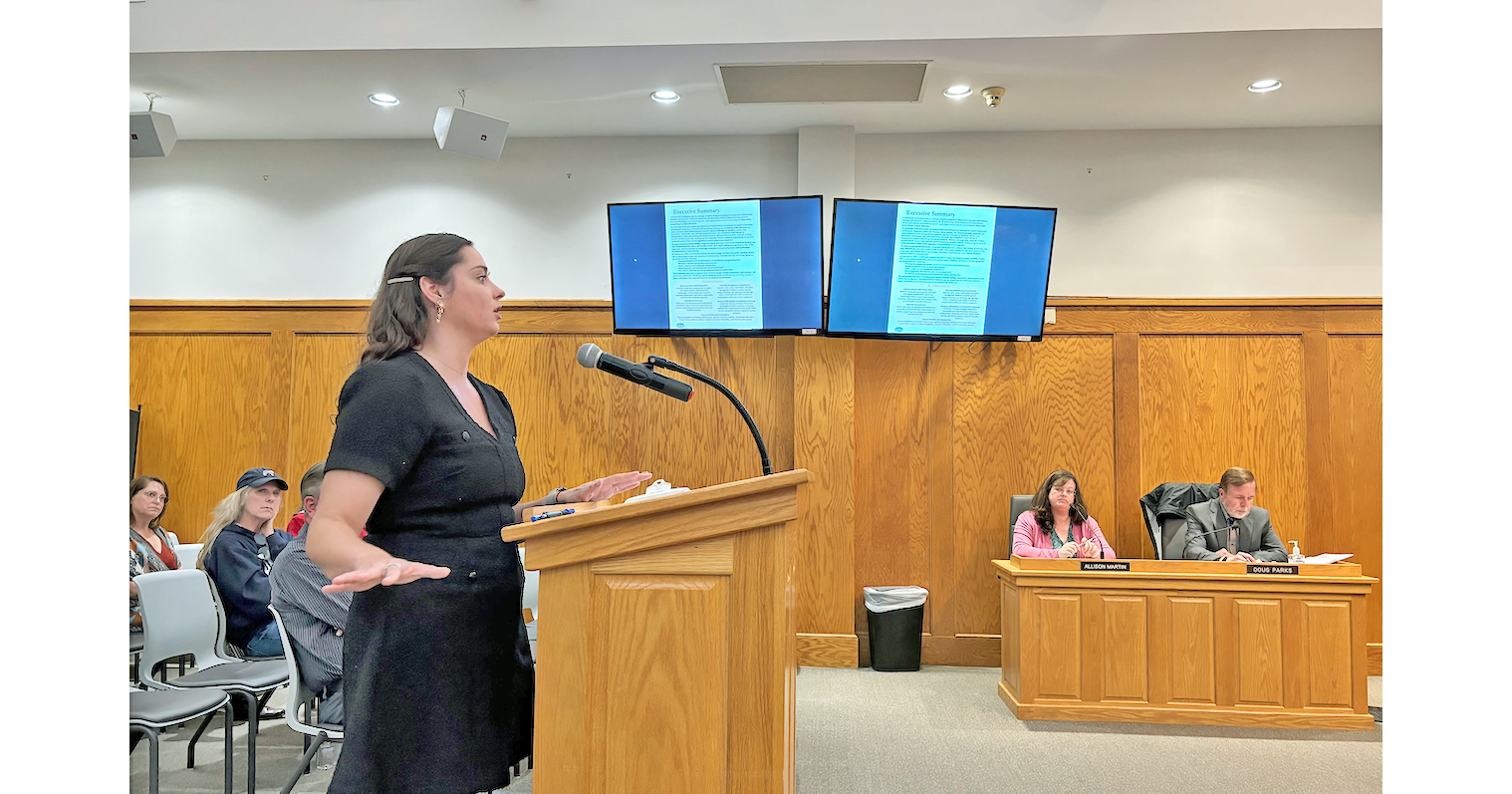
“This is a community driven plan,” said Tate Wilson from the KB Advisory Group as she unveiled that plan last Monday. “So it takes into account … infrastructure, looking at parking, looking at housing trends, looking at water and sewer and understanding what balanced and efficient growth would look like in the future.”
While the plan touched on a lot of topics, housing was the most discussed issue at the meeting.
“Mr. Shirley is correct in his assessment of the situation,” said Mayor JoAnne Taylor. “But I think the goal here is to have density, but have it controlled and not big apartment buildings. … You can have a cottage court option in which you would have multiple houses on a plot of land and a shared community space in the middle.”
Taylor added that the possibility of duplexes and triplexes could help with the problem.
“Smaller types of density,” she said. “Not big giant apartments. But it is a challenge. These guys have been spending a lot of time on that.”
PRICING PLAN
While City housing is scarce, the new findings show that it’s also expensive.
The KB Advisory Group’s plan states that 62 percent of housing in the “target area of Dahlonega” is comprised mainly of renter-occupied units. It’s a number that has jumped since 2015.
“Traditional multi-family rents have increased 30 percent while traditional and student multi-family housing has increased nearly 50 percent,” stated the plan.
All the while, the rate of households spending more than 30 percent of their income on housing has reportedly jumped from 25 percent in 2017 to 85 percent in 2023.
Of course the University of North Georgia is a big factor in the local housing hunt, as the report states that student housing represents close to 40 percent of all rental inventory within the target area.
And while it can be unpopular with the populace, Wilson indicated that providing enough student housing is key to freeing up additional homes for everyone.
“Fulfilling the student housing demand is going to help on all fronts for housing,” she said. “And so the ability to do that, whether it's subsidized or unsubsidized housing, is going to take up some of that pressure that you’re seeing on the market.”
Meanwhile council member Lance Bagley stressed that quality needs to go along with the quantity when it comes to development.
“I hear all the time that people are wanting to get out of the bigger homes, maybe in the county, and move into the downtown where it is walkable,” he said. “A smaller footprint as they get older. So not only does that appeal to the college students, but it also appeals to empty nesters who are looking to downsize and move in to the city.”
GRANTING GROWTH
While the Revitalization Plan doesn’t solve the problems, it is designed to give the City officials a chance to get their foot in the door. Or, more specifically, it should bring grant funding for future projects.
“The intent of this plan is to basically allow the City to go after some grants and other types of assistance to do things in some of our neighborhoods that need doing,” said Taylor. “I’ll give you an example. Sidewalks are a big deal here, and this would allow us to apply for more grants than we can do today. So having this type of plan in place really helps us to do revitalization in those areas of our city where it is appropriate.”
Taylor added that these grants could give a boost to downtown homes that might be falling into disrepair.
“Some of our neighborhoods, there are legacy families living in these neighborhoods and quickly they're becoming dilapidated and they’re not able to maintain their properties in the way that they possibly should,” she said. “And so this would allow us to get grants to help with those neighborhoods.”
Taylor also stressed that this is not an overnight answer, but perhaps something that will one day provide solutions to the current conundrum.
“It’s going to be multi-year,” she said. “This is not something that's going to be accomplished in the next six months. This gives us the foundation to pursue those grants.”