
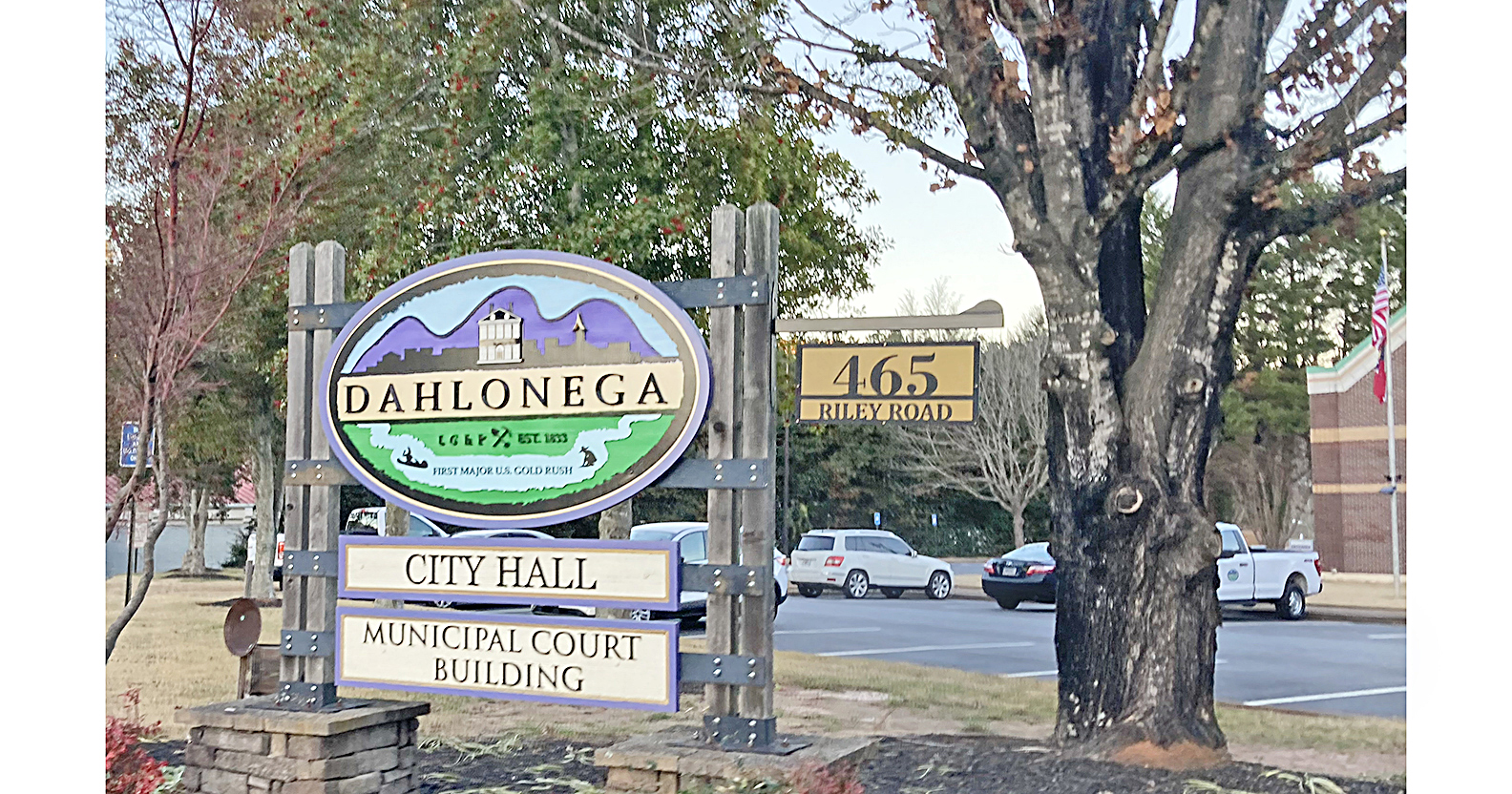
By Keith Murden and Hunter Mauldin / The Nugget -------------------- Lumpkin County and the City of Dahlonega have both declared their support for House Bill 581, a law that takes effect January 1, 2025 and establishes a new homestead property tax exemption statewide.
Under the new law, each county, city and school system in the state is provided with an opportunity to individually opt out of the new “floating” exemption, which is a special type of homestead exemption that reduces the increase in taxable property value by tying annual increases to the federal inflation rate.
On December 4, the Lumpkin County School Board held a vote authorizing a timeline by Superintendent Sharon Head to begin the formal opt-out process on January 1.
That process requires three advertised public hearings of the school board to take place before paperwork can be filed with the Secretary of State’s office by the March 1 deadline.
Head said that the school system would prefer to set their own terms for any future local homestead exemptions, rather than have the amount of the cap and its duration mandated by the state.
The City and County, on the other hand, cited the overwhelming passage of a constitutional amendment enabling the legislation as evidence of its local support among voters.
Neither entity has formally declared whether they intend to levy a new FLOST [Floating Local Option Sales Tax] of up to one percent, also authorized under the new law, to offset any decrease in property tax collections.
The school system does not have the option of collecting FLOST, meaning future increases in the millage rate would likely be required to maintain existing levels of service.
CITY DISCUSSION
At the December 16 work session, the Dahlonega City Council held a “Post Election Discussion” regarding HB 581 led by City Manager Allison Martin.
Martin presented a memorandum on the new law, explaining the process for opting out and the option of levying a FLOST. She noted the County would be publicly announcing their intentions, then opened the floor for the council to discuss the matter.
“This has been an interesting house bill to say the least,” said Councilman Johnny Ariemma.
“The one percent sales tax is probably a good idea if something else was to go away, and I don’t see any of those going away,” he continued, referring to the other four local one percent sales taxes, the LOST, SPLOST, TSPLOST and E-SPLOST.
“Nobody’s gonna buy that,” he said.
Martin responded to Ariemma’s comment, noting that HB 581 specifies that the FLOST could be levied in 0.05 percent increments, up to one percent.
“It can be implemented fractionally, and you can institute it at a later time. It doesn't have to be in the first year, and we don’t know what to expect with future legislation. I fully expect them to make changes to the bill. There were some flaws in the bill that need to be addressed,” she said.
At that point, Mayor JoAnne Taylor jumped in to limit the scope of the discussion.
“To clarify, we are just talking about the floating exemption, not any tax increase tonight,” she said.
Council Member Roman Gaddis pivoted back to the exemption, arguing against an opt-out.
“I think the council would be wise to sit with an opt-in because so many people voted for it,” he said, noting that the constitutional amendment was “overwhelmingly” approved by the voters.
“It’s good for property owners, but it does shift the tax burden to other types of properties. It's a minimal impact on us in the City, so I think it’s wise to stay opted-in,” Gaddis continued.
At the same time, he showed sympathy for the unique position the school system finds itself in regarding the law.
“School boards are impacted more quickly, and as I understand it, 88 percent of the school boards in the state are going to opt out,” Gaddis added.
Martin told the council that the City and County are keeping an open line of communication with each other regarding the new law.
That prompted a question from Gaddis.
“If the County opts to have a referendum for FLOST, do we have to as well? Can one entity choose to and the other not?” he asked.
“Cities whose populations comprise more than 50 percent of a county’s population must implement the referendum together through an IGA [Intergovernmental Agreement],” replied Martin.
“We’ll be in discussion with the County on that,” Taylor said.
While the council did not hold a formal vote memorializing their intention, Taylor said they plan to do so early next year.
“Our plan is to take a vote to signify that we’re opting in. We’ll be doing that in January,” she said.
COUNTY VOTE
HB 581 first appeared on the County agenda at the December 3 Board of Commissioners meeting.
At that time, Chairman Chris Dockery suggested that the board would be willing to codify their position on HB 581, even though no action is technically required to opt in.
“Of course we know the voters voted for the floating homestead exemption and the option of a FLOST, or Flexible Local Option Sales Tax. So I think it’s wise for our board to solidify our position in the form of a resolution as it relates to [HB] 581,” Dockery said, announcing that the board would adopt a resolution at the December regular session.
He instructed members of the board to huddle with staff ahead of that meeting so that a resolution accurately reflecting the will of the board could be drafted.
On December 17, a day after the City Council held their preliminary discussion, the Board of Commissioners held a vote on Resolution No. 2024-56 regarding HB 581.
The resolution states that “although no action is required to affirmatively opt-in to the statewide floating homestead exemption, the Lumpkin County Board of Commissioners desires to memorialize its intention for the benefit of the citizens of Lumpkin County.”
“Lumpkin County does not opt-out of the statewide floating exemption established by HB 581 and said exemption will apply to residential homestead properties in Lumpkin County effective January 1, 2025,” the resolution continued.
“Do I have a desire of the board?” Dockery asked.
Commissioner Dr. Bobby Mayfield introduced a motion to approve, which was seconded by Commissioner Rhett Stringer.
The resolution passed unanimously, paving the way for potential discussions with the City on a FLOST IGA.
The Nugget reached out to Dockery, who has been publicly skeptical of a new one percent sales tax, to see if he would be open to negotiating with the City on a smaller, fractional FLOST agreement.
“I don't think there's support among the board of commissioners or the voters to increase the sales tax at all,” he replied.
Dockery indicated the only way he could consider supporting an increase would be “to further reduce the property tax burden by replacing it with a sales tax.”
“This would be a risky proposition since property tax generates a known amount where sales tax can be unpredictable. As of now, my support would be unlikely unless additional information shows how this would be beneficial to the residents of Lumpkin County,” he stated.